
What drives air purifier cost
Room size, filters, energy, and features, explained.
Disclosure: We may earn a commission if you buy through links on this page. It does not change our guidance. Affiliate Disclosure
Why we do not list prices
Retailers and makers set prices, and prices change. We explain what drives cost instead. We do not pick models.
Room size and CADR
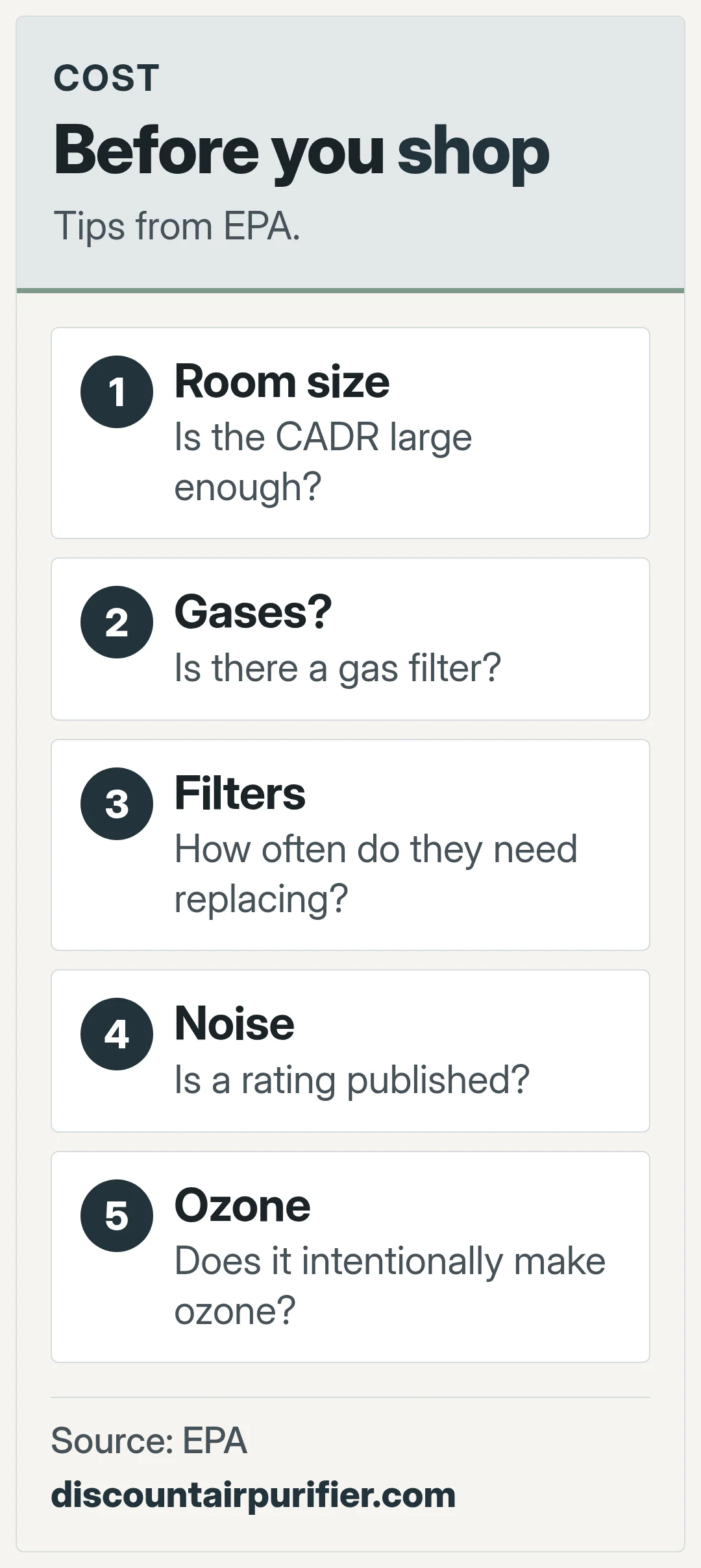
EPA says to choose a portable air cleaner with a CADR large enough for the room. ENERGY STAR says larger models use more energy and advises choosing a model sized to fit the room.
Filters to replace
EPA says all filters need regular replacement. It says many air cleaners contain two filters, one for particles and another for gases. Our cost of owning guide covers the upkeep.
Energy use
ENERGY STAR says a standard room air cleaner, operating continuously, uses approximately 394 kWh of electricity a year. EPA says the ENERGY STAR label means a unit meets EPA energy efficiency guidelines, and does not refer to its air-cleaning effectiveness in any way.
Features EPA mentions
EPA mentions published noise ratings, separate CADRs for smoke, dust, and pollen, and activated carbon filters for gases. Each one is something to check on the label. We do not say which ones a home needs.
Ozone to avoid
EPA says to avoid portable air cleaners and furnace or HVAC filters that intentionally produce ozone. CARB says all indoor air cleaners sold in California must be certified by CARB, and that certification is based on a device's low (usually near-zero) ozone emissions and electrical safety. That is not a rating of how well a unit cleans the air.
Sources: EPA, Guide to Air Cleaners in the Home; ENERGY STAR, Air Cleaners; California Air Resources Board, Air Cleaner Information for Consumers; EPA, Research on DIY Air Cleaners to Reduce Wildfire Smoke Indoors; California Air Resources Board, Hazardous Ozone-Generating Air Purifiers; EPA, Create a Clean Room to Protect Indoor Air Quality During a Wildfire.
FAQ
General information only. An air purifier is not a substitute for ventilation, for removing the source of a pollutant, or for medical care. Read and follow the maker's manual. The California Air Resources Board strongly advises against the use of ozone generators in spaces occupied by people or animals. If you have asthma, allergies, or heart or lung disease, talk to your doctor. During wildfire smoke, follow local officials and be ready to evacuate. In an emergency, call 911.
Next: cost of Owning
Filters, power, and upkeep.
