
Air purifier room size, explained
Square feet, ceilings, and EPA's sizing chart.
Disclosure: We may earn a commission if you buy through links on this page. It does not change our guidance. Affiliate Disclosure
Measure the room
EPA says to multiply the length and width of the area to get its size in square feet. It says to compare this to the maximum recommended room size on the product packaging.
EPA's sizing chart
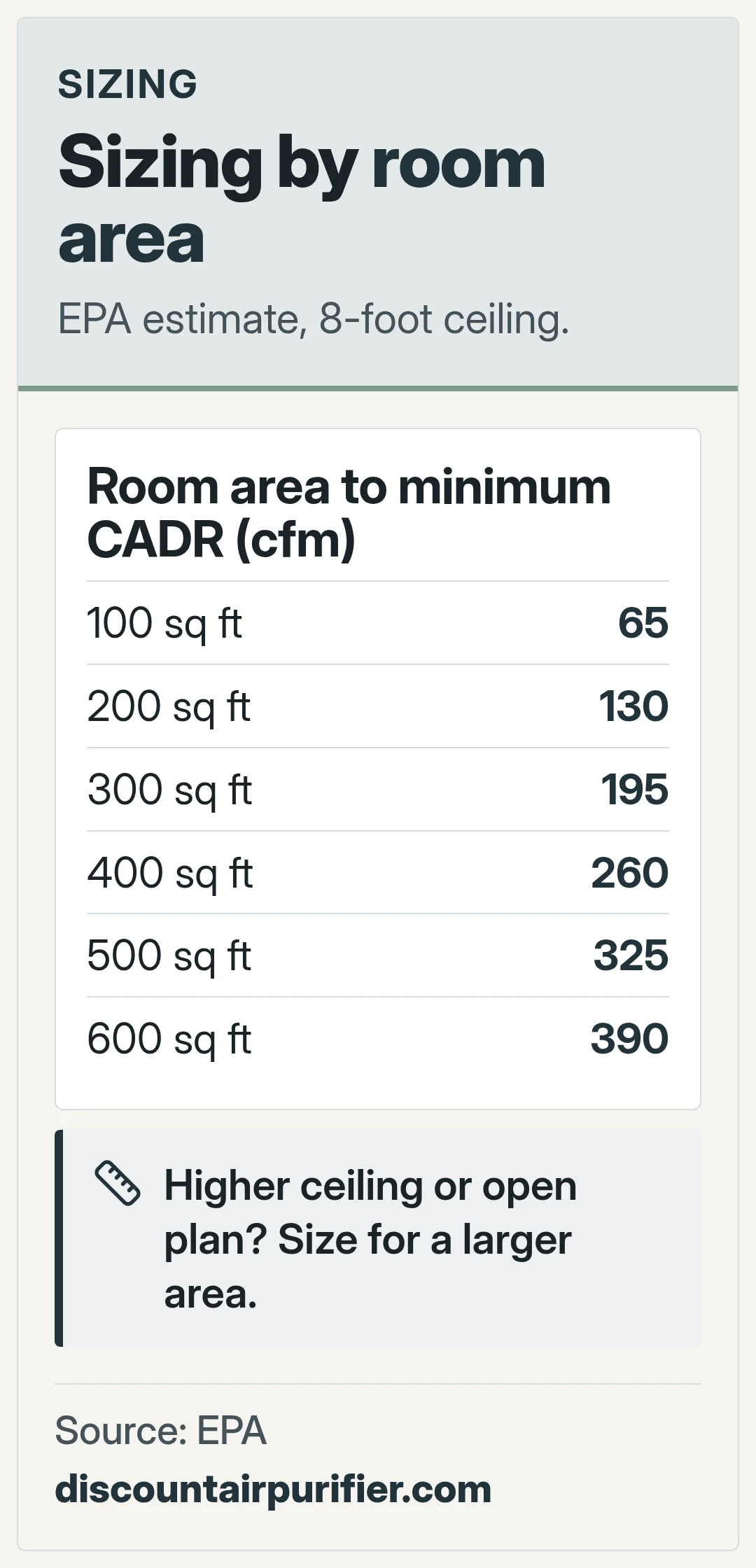
EPA gives a chart for estimation purposes. It lists a minimum CADR of 65 cfm (cubic feet per minute) for a 100-square-foot room and 195 cfm for a 300-square-foot room, up to 390 cfm for a 600-square-foot room. EPA says the CADRs are calculated based on an 8-foot ceiling.
High ceilings and open plans
EPA says that with ceilings above 8 feet, you should consider an air cleaner sized for a larger area. With an open floor plan, it says to consider the entire space the air cleaner would serve.
Large rooms
EPA says that if you have an area larger than any available product will serve, you could consider using multiple air cleaners.
Bedrooms
EPA says to consider placing the unit in the rooms you spend the most time in. For wildfire smoke, EPA names a bedroom with an attached bathroom as one good choice for a clean room.
Size and energy
ENERGY STAR says larger models use more energy and advises choosing a model sized to fit your room.
FAQ
General information only. An air purifier is not a substitute for ventilation, for removing the source of a pollutant, or for medical care. Read and follow the maker's manual. The California Air Resources Board strongly advises against the use of ozone generators in spaces occupied by people or animals. If you have asthma, allergies, or heart or lung disease, talk to your doctor. During wildfire smoke, follow local officials and be ready to evacuate. In an emergency, call 911.
Next: CADR
How to read the rating.
