
Where to put an air purifier
Placement, fan speed, run time, and noise.
Disclosure: We may earn a commission if you buy through links on this page. It does not change our guidance. Affiliate Disclosure
Rooms where you spend time
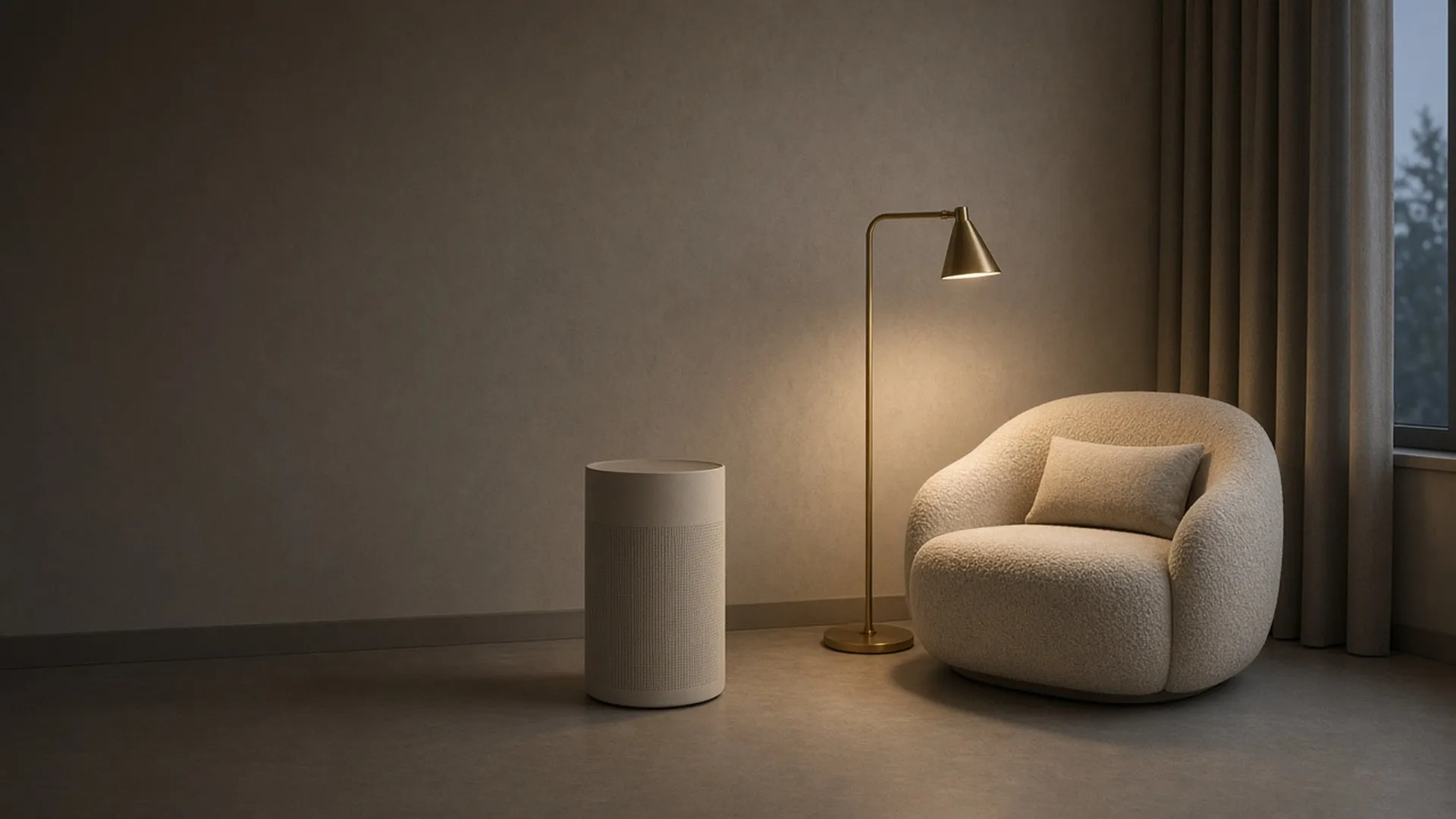
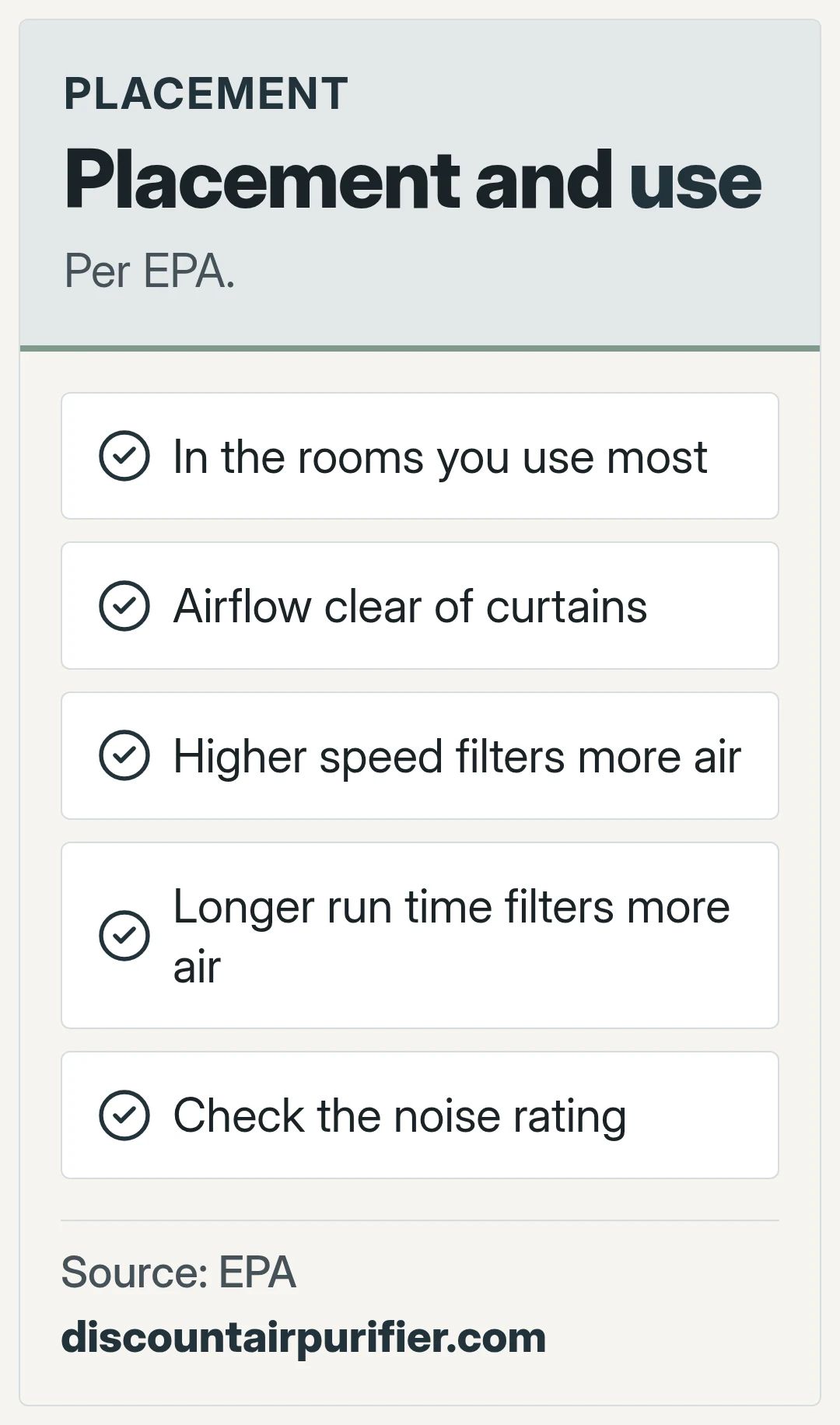
EPA says to consider placing the unit in the rooms you spend the most time in. It says many units are designed to be placed on the floor, and some are designed for tabletops.
Keep the airflow clear
EPA says to make sure the airflow is not obstructed, and to keep air cleaners away from curtains and anything that might block airflow. If the unit causes an uncomfortable draft, EPA says to redirect the airflow away from you.
Fan speed
EPA says higher fan speeds and longer run times will generally increase the amount of air filtered. It says an air cleaner will filter less air if it is set at a lower speed.
Run time
EPA says increasing the amount of time an air cleaner runs will also increase air filtration. During wildfire smoke, AirNow says portable air cleaners work best when run continuously with doors and windows closed.
Noise ratings
EPA says noise ratings are reported for some portable air cleaners and may be shown on the packaging. It says noise depends in part on fan speed, and that a rating around 50 decibels is roughly the operating noise of a modern refrigerator.
If noise keeps it off
EPA says that if noise might prevent you from running the unit, you might consider an air cleaner that has a low published noise rating. We do not rate any unit for noise.
FAQ
General information only. An air purifier is not a substitute for ventilation, for removing the source of a pollutant, or for medical care. Read and follow the maker's manual. The California Air Resources Board strongly advises against the use of ozone generators in spaces occupied by people or animals. If you have asthma, allergies, or heart or lung disease, talk to your doctor. During wildfire smoke, follow local officials and be ready to evacuate. In an emergency, call 911.
Next: room Size
Square feet and ceilings.
