
Activated carbon filters, explained
Gases, odors, and VOCs, and why no CADR covers them.
Disclosure: We may earn a commission if you buy through links on this page. It does not change our guidance. Affiliate Disclosure
Particles and gases
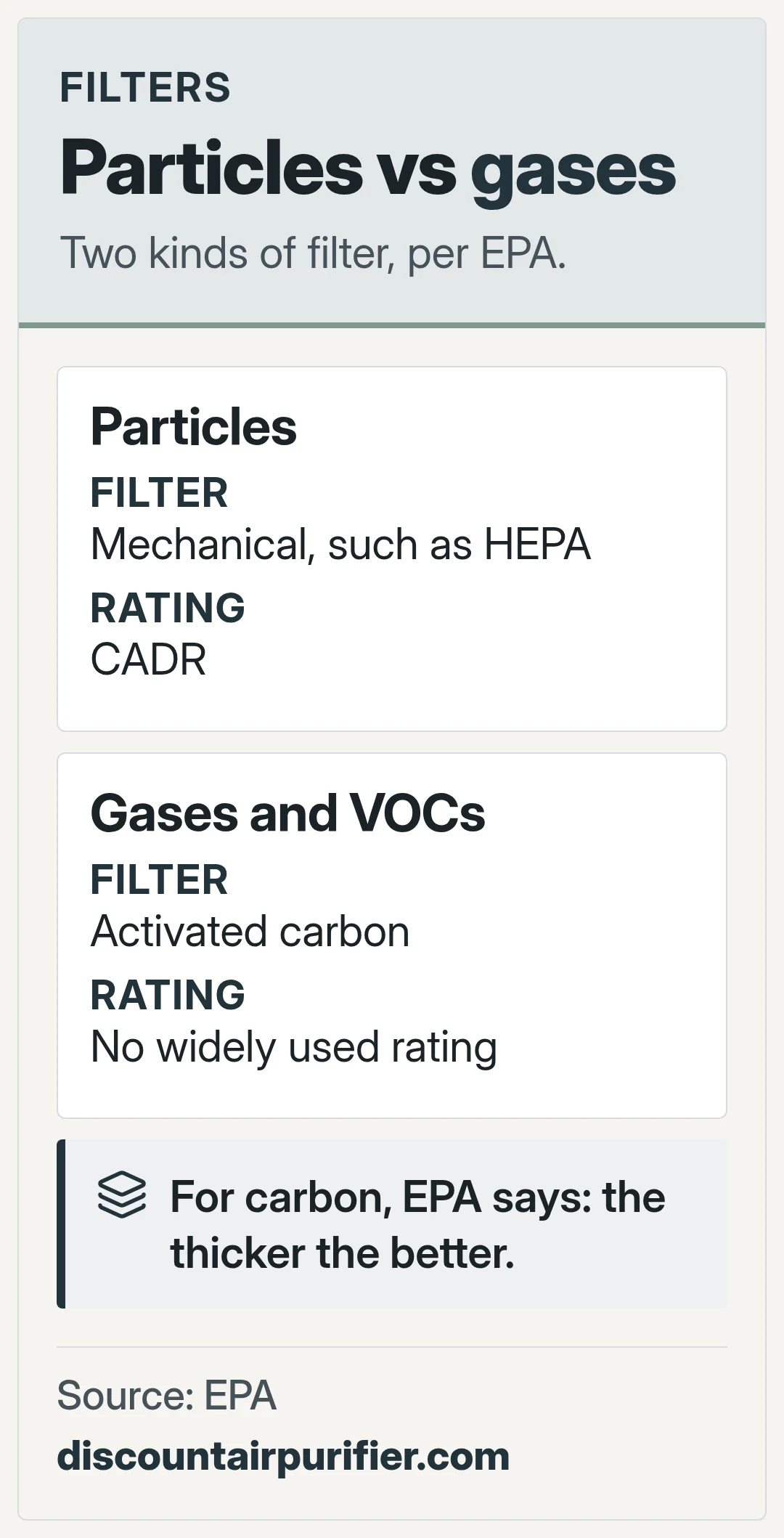
EPA says indoor air pollutants can be particles or gases, including volatile organic compounds (VOCs). It says most filters are designed to filter either particles or gases.
What a carbon filter does
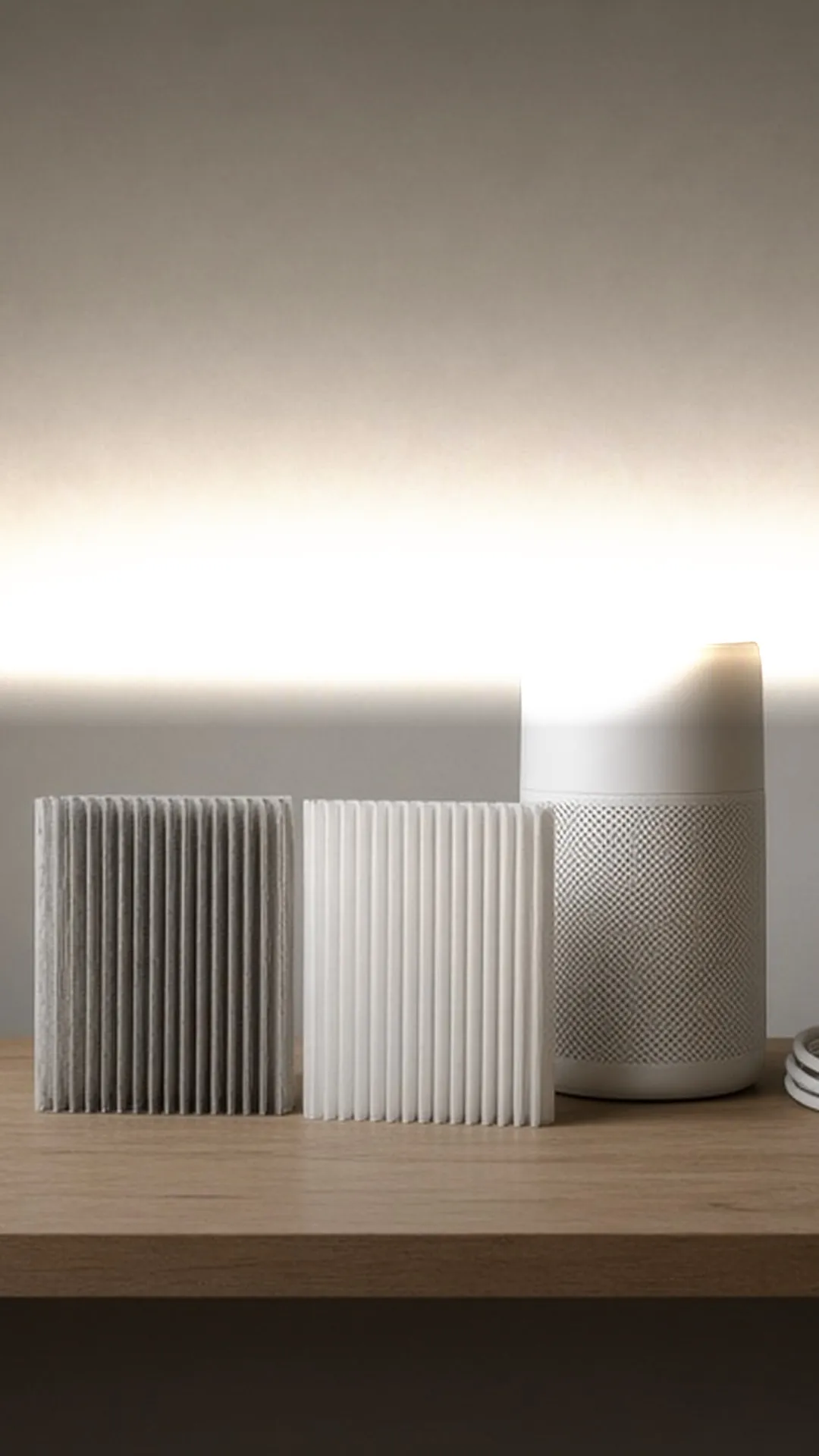
EPA says that to filter gases, you should choose a portable air cleaner with an activated carbon filter or other filter designed to remove gases. It says these can be effective when there is a large amount of material used in the filter, and adds "the thicker the better."
No rating for gases
EPA says there are no widely used performance rating systems for portable air cleaners or filters designed to remove gases. It says the CADR rating system is for particles only.
Odors
EPA says some air cleaners or filters are targeted to specific types of gases or VOCs, and to check the product packaging or labeling for more information. For musty odors from mold, EPA says air cleaners will not resolve a mold and moisture problem.
Tobacco smoke
EPA's technical summary says air cleaning is not an effective way to address environmental tobacco smoke. It says tobacco smoke holds thousands of particle and gas compounds that cannot be removed effectively by air cleaning.
Radon
EPA says air cleaners without special media such as activated carbon will not remove gaseous pollutants, including radon. Its technical summary says EPA does not recommend air cleaning to reduce the health risks of radon, and recommends source-control technologies instead.
FAQ
General information only. An air purifier is not a substitute for ventilation, for removing the source of a pollutant, or for medical care. Read and follow the maker's manual. The California Air Resources Board strongly advises against the use of ozone generators in spaces occupied by people or animals. If you have asthma, allergies, or heart or lung disease, talk to your doctor. During wildfire smoke, follow local officials and be ready to evacuate. In an emergency, call 911.
Next: types of Air Purifiers
Filters, ionizers, UV, ozone.
