
Types of air purifiers
Filters, electronic air cleaners, UV, and ozone generators.
Disclosure: We may earn a commission if you buy through links on this page. It does not change our guidance. Affiliate Disclosure
Mechanical filters
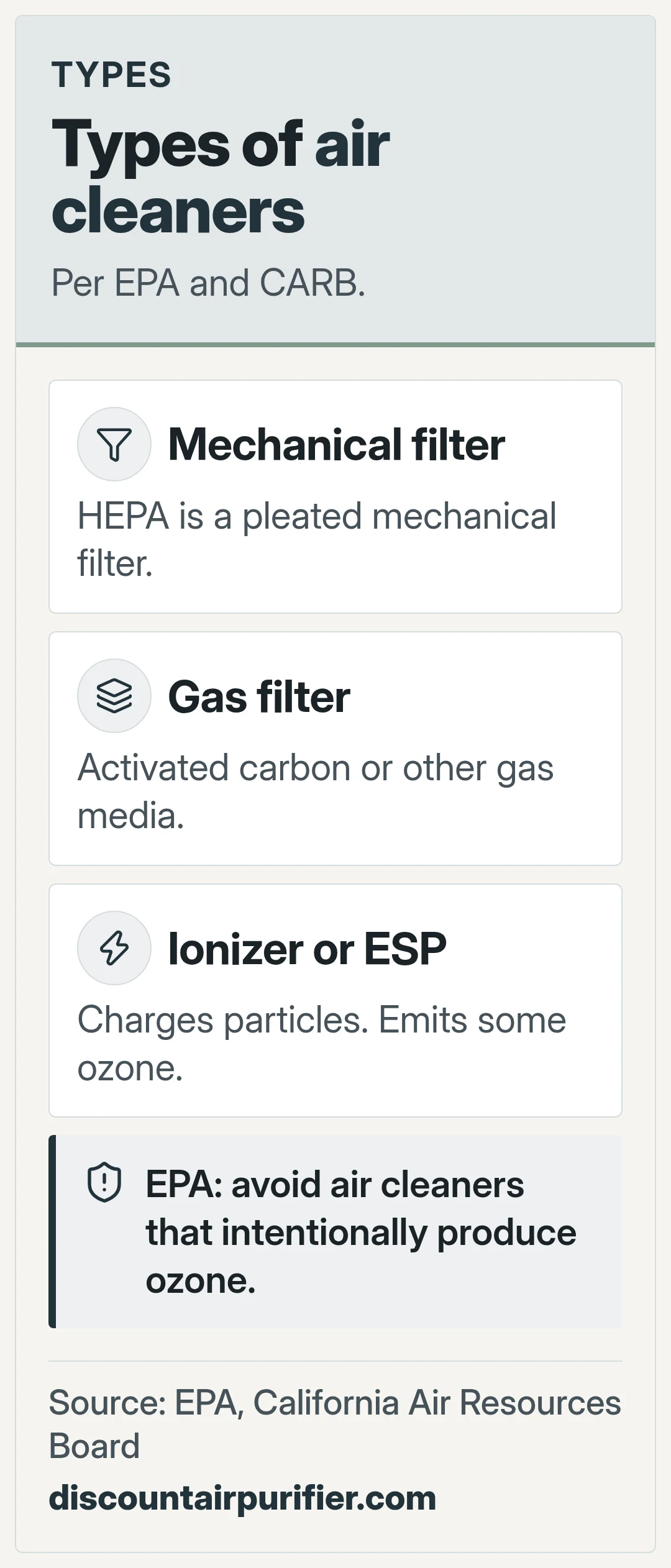
A mechanical filter catches particles as air passes through it. EPA calls HEPA a type of pleated mechanical air filter.
Gas filters
EPA says that to filter gases, you should choose a portable air cleaner with an activated carbon filter or other filter designed to remove gases.
Electrostatic precipitators and ionizers
The California Air Resources Board (CARB) says air cleaners that use ionizers and electrostatic precipitators are designed to electrically charge particles in the air and cause them to attach to surfaces in the room. It says ozone is released through the charging process, although these devices typically emit much less ozone than ozone generators.
UV, PCO, and plasma
EPA says research has not yet shown that plasma, photocatalytic oxidation (PCO), or ultraviolet (UV) light can remove gases effectively in portable residential air cleaners. It also says UV lights without adequate lamp coatings and plasma air cleaners may have the potential to emit ozone.
Ozone generators
EPA says ozone generators that are sold as air cleaners intentionally produce the gas ozone, and that no federal government agency has approved these devices for use in occupied spaces. Our ozone guide covers this in full.
Which type fits a home?
We do not pick a type or a model. EPA says to avoid portable air cleaners and furnace or HVAC filters that intentionally produce ozone.
FAQ
General information only. An air purifier is not a substitute for ventilation, for removing the source of a pollutant, or for medical care. Read and follow the maker's manual. The California Air Resources Board strongly advises against the use of ozone generators in spaces occupied by people or animals. If you have asthma, allergies, or heart or lung disease, talk to your doctor. During wildfire smoke, follow local officials and be ready to evacuate. In an emergency, call 911.


Next: ozone and ionizers
Why ozone is a health risk.
