
HEPA filters, explained
What HEPA means, per the Department of Energy and EPA.
Disclosure: We may earn a commission if you buy through links on this page. It does not change our guidance. Affiliate Disclosure
What HEPA stands for
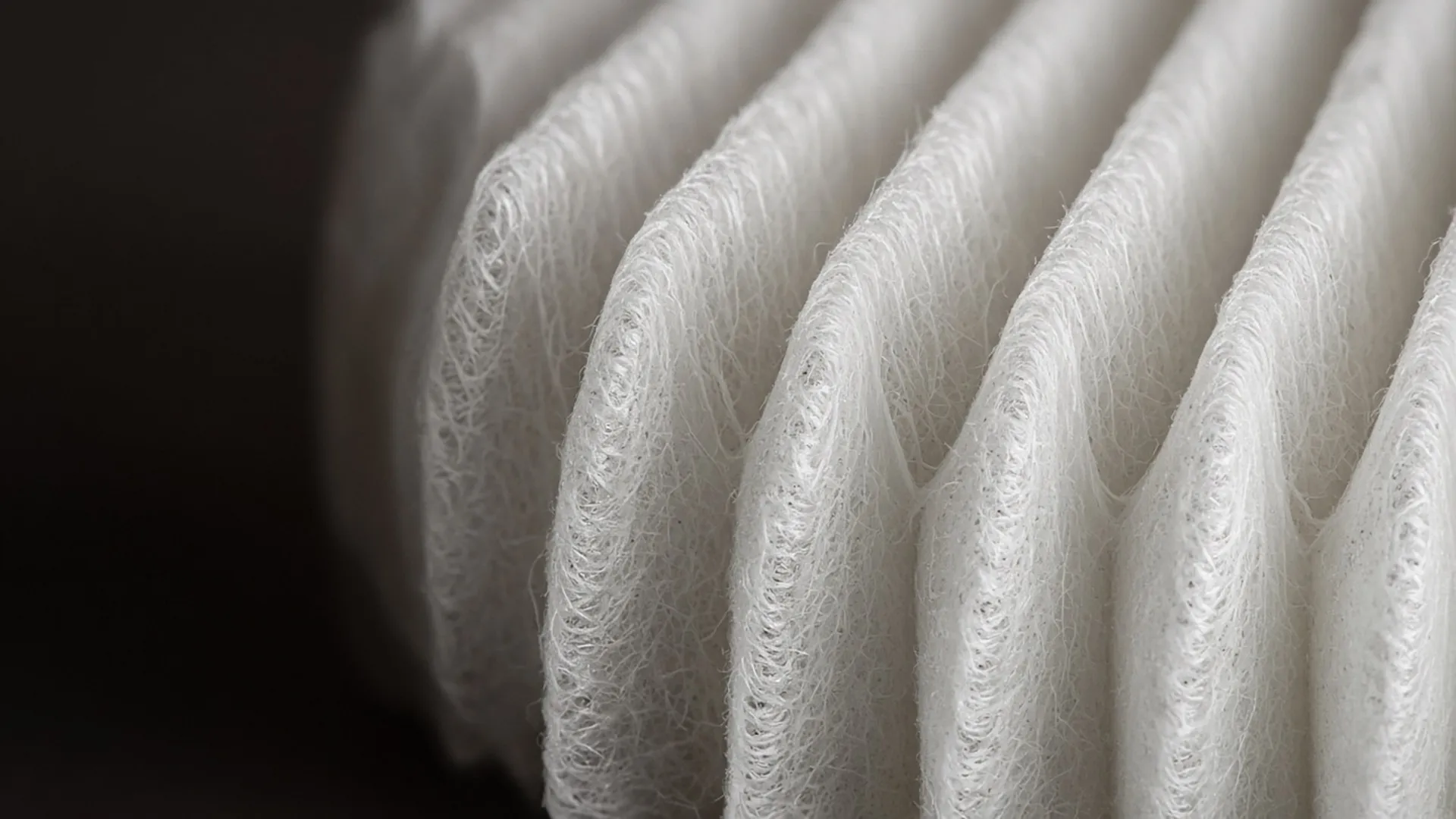
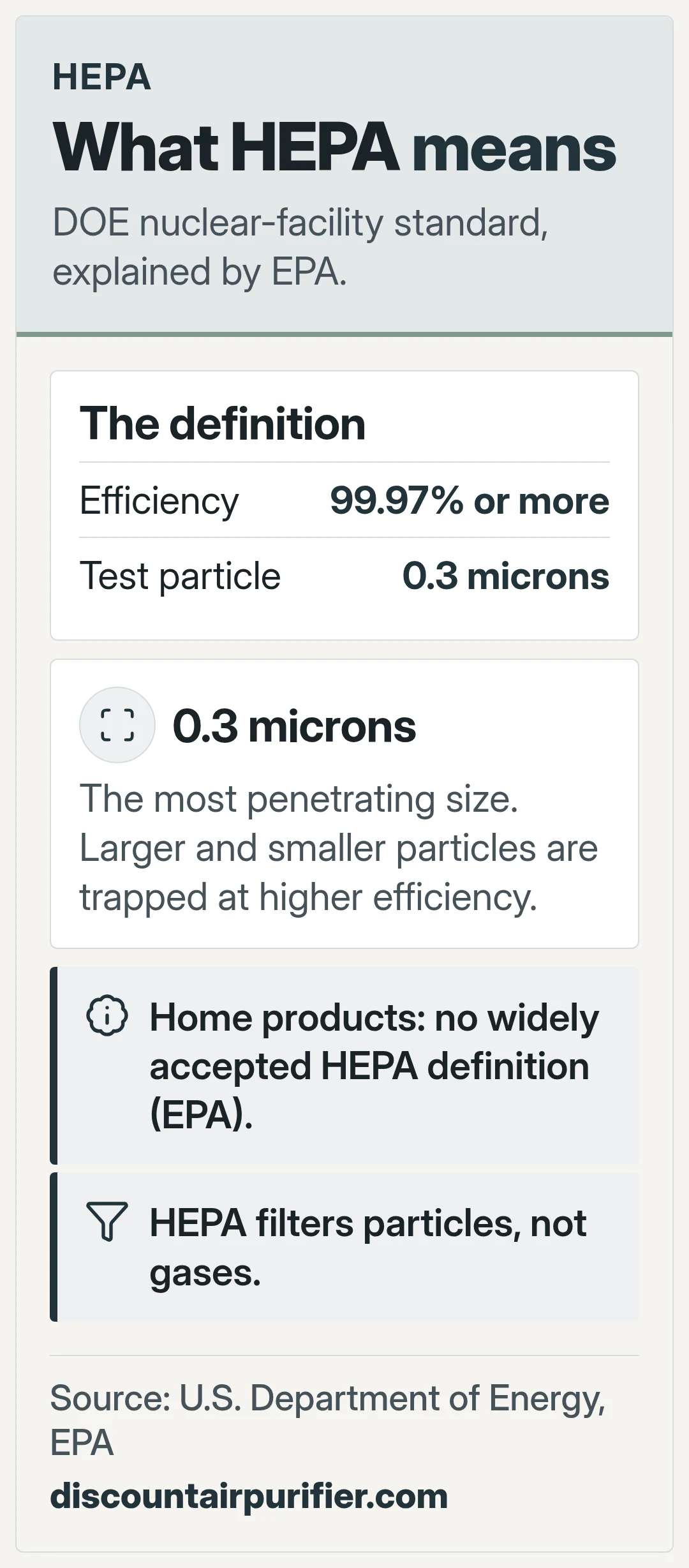
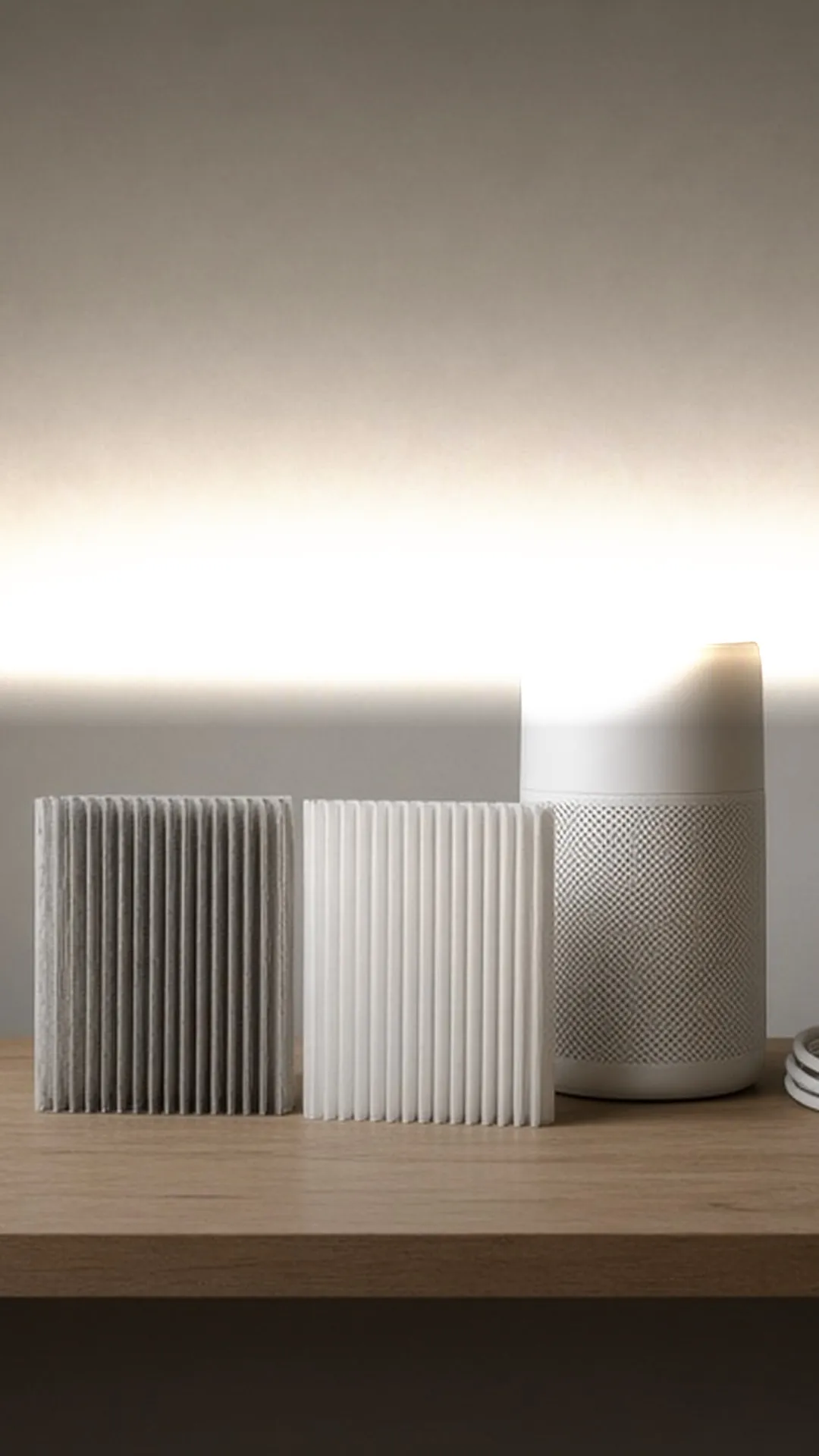
EPA says HEPA is an acronym for "high efficiency particulate air" filter, as officially defined by the U.S. Department of Energy. It calls HEPA a type of pleated mechanical air filter that is common in portable air cleaners.
The Department of Energy definition
The Department of Energy standard DOE-STD-3020-2015, Specification for HEPA Filters Used by DOE Contractors, says a HEPA filter "shall exhibit a minimum efficiency of 99.97% when tested with an aerosol of 0.3 micrometer diameter." That standard is written for buying and testing HEPA filters used in DOE nuclear facilities. It is not a rule for home air purifiers, and no federal agency tests or certifies the HEPA filters in home air purifiers. EPA says it does not certify or register air cleaning devices.
What 0.3 microns means
EPA says a HEPA filter can theoretically remove at least 99.97% of dust, pollen, mold, bacteria, and other airborne particles with a size of 0.3 microns. It says 0.3 microns is the worst case, the most penetrating particle size, and that larger or smaller particles are trapped with even higher efficiency. That figure describes the filter itself. For how much air a portable unit cleans, EPA points to its CADR.
True HEPA and HEPA-type
EPA's technical summary says there is no widely accepted definition of HEPA performance in consumer products. It says HEPA-designated home air filters usually perform at high levels comparable to a MERV 16 filter, and that they are unlikely to be equivalent in performance to HEPA-designated filter systems used in health care buildings and industrial processes. "True HEPA" and "HEPA-type" are makers' marketing terms, not a standard. Read what the maker says was tested.
HEPA and CADR
EPA says portable air cleaners often achieve a high clean air delivery rate (CADR) by using a HEPA filter. It says to choose a CADR large enough for the room. Our CADR guide explains the rating.
HEPA does not filter gases
A HEPA filter is a particle filter. EPA says that to filter gases, you need an activated carbon filter or other filter designed to remove gases.
Sources: EPA, What is a HEPA filter?; U.S. Department of Energy, DOE-STD-3020-2015, Specification for HEPA Filters Used by DOE Contractors; EPA, Residential Air Cleaners: A Technical Summary, 3rd edition (PDF); EPA, Guide to Air Cleaners in the Home; EPA, Does EPA certify/register or provide lists of acceptable air cleaners or manufacturers/sellers?.
FAQ
General information only. An air purifier is not a substitute for ventilation, for removing the source of a pollutant, or for medical care. Read and follow the maker's manual. The California Air Resources Board strongly advises against the use of ozone generators in spaces occupied by people or animals. If you have asthma, allergies, or heart or lung disease, talk to your doctor. During wildfire smoke, follow local officials and be ready to evacuate. In an emergency, call 911.
Next: MERV vs HEPA
Two ways filters are rated.
