
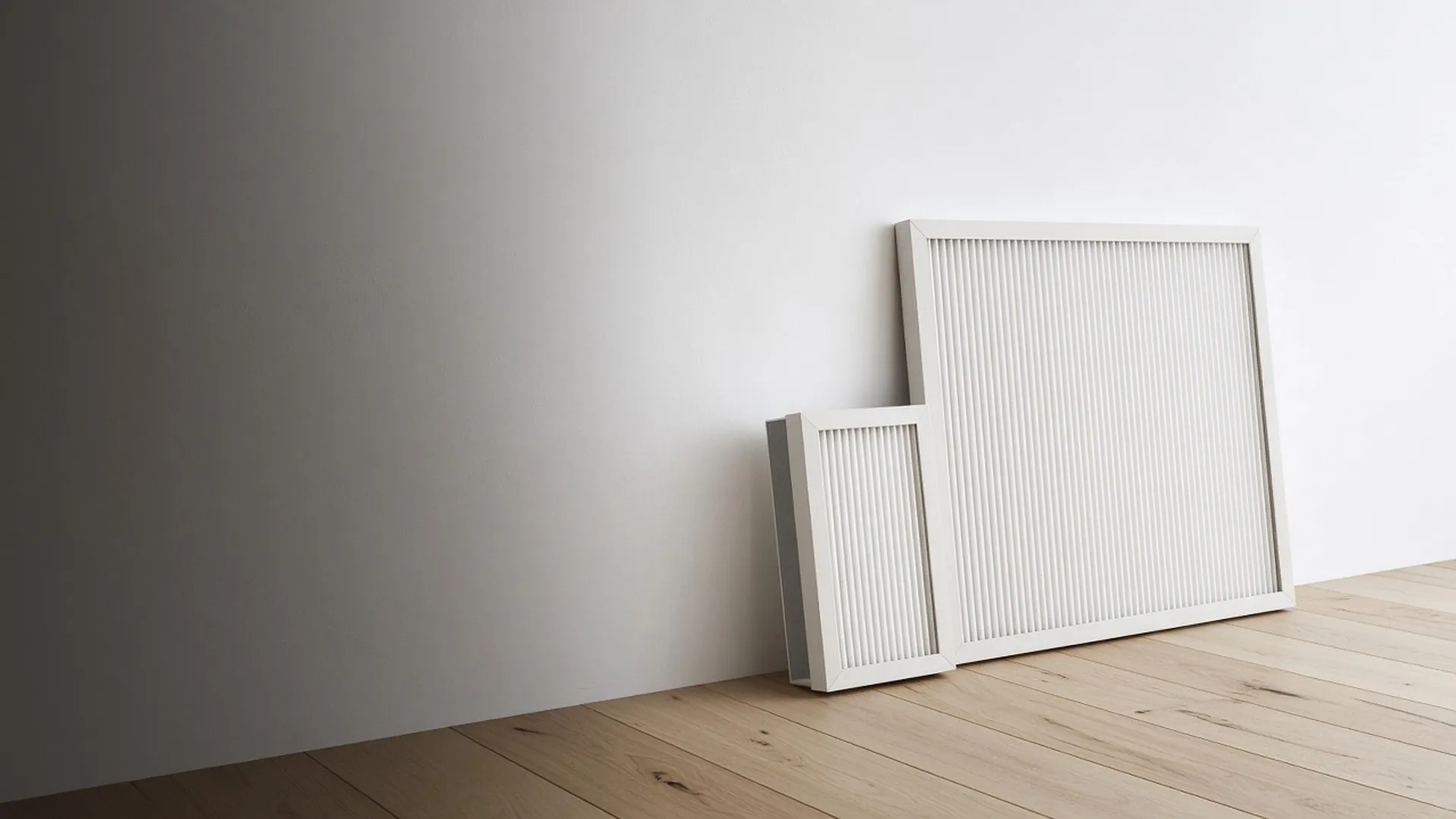
MERV vs HEPA filters
Two ways filters are rated, and where each one is used.
Disclosure: We may earn a commission if you buy through links on this page. It does not change our guidance. Affiliate Disclosure
What MERV stands for
MERV stands for Minimum Efficiency Reporting Value. EPA says MERVs report an air filter's ability to capture particles between 0.3 and 10 microns. It says the rating comes from a test method developed by the American Society of Heating, Refrigerating, and Air Conditioning Engineers (ASHRAE).
Higher numbers trap more
EPA says the higher the MERV rating, the better the filter is at trapping specific sizes of particles. It says MERV is helpful for comparing filters, particularly for furnace or central HVAC systems.
MERV 8, 11, and 13
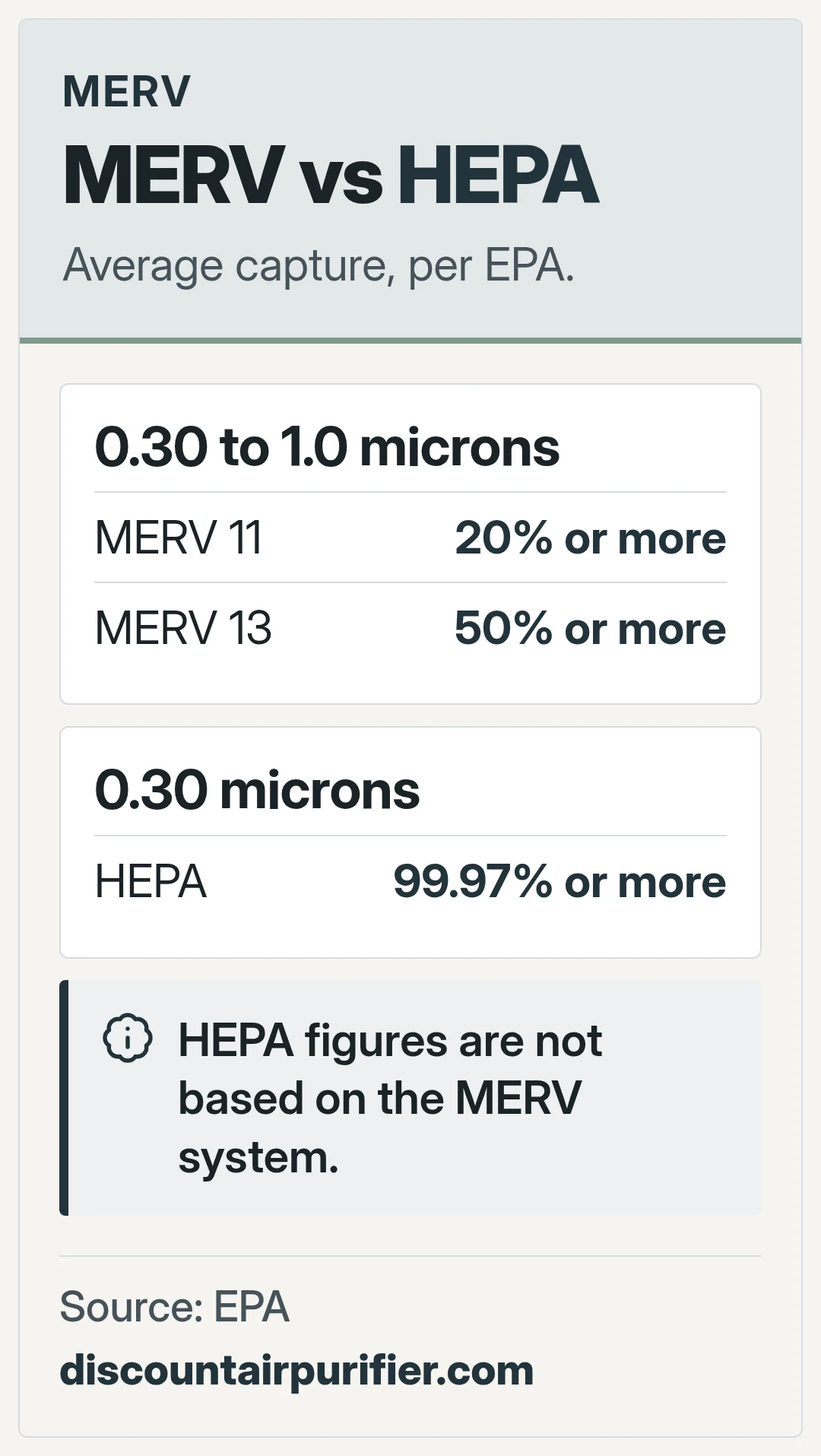
EPA's table gives average capture efficiency by particle size. It lists MERV 8 at 20% or more for particles from 1.0 to 3.0 microns. It lists MERV 11 at 20% or more, and MERV 13 at 50% or more, for the smallest range, 0.30 to 1.0 microns.
Where HEPA fits
EPA lists HEPA filters at 99.97% or more for 0.30-micron particles, and says those HEPA figures are not based on the MERV rating system. EPA's technical summary says filters described as HEPA in residential air cleaners are generally equivalent to MERV 16.
MERV 13 in a home system
EPA says that if you upgrade, you should choose a filter with at least a MERV 13 rating, or as high a rating as your system fan and filter slot can accommodate. It says you may need to consult a professional HVAC technician to find the highest efficiency filter that will work for your system.
Fit and replacement
EPA says the filter should fit snugly so air does not leak around it, and that you should not have to bend or crush it to make it fit. It says manufacturers typically recommend replacement every 60 to 90 days, and to replace filters according to their recommendations.
FAQ
General information only. An air purifier is not a substitute for ventilation, for removing the source of a pollutant, or for medical care. Read and follow the maker's manual. The California Air Resources Board strongly advises against the use of ozone generators in spaces occupied by people or animals. If you have asthma, allergies, or heart or lung disease, talk to your doctor. During wildfire smoke, follow local officials and be ready to evacuate. In an emergency, call 911.
Next: HEPA Filters
What the 99.97% means.
