
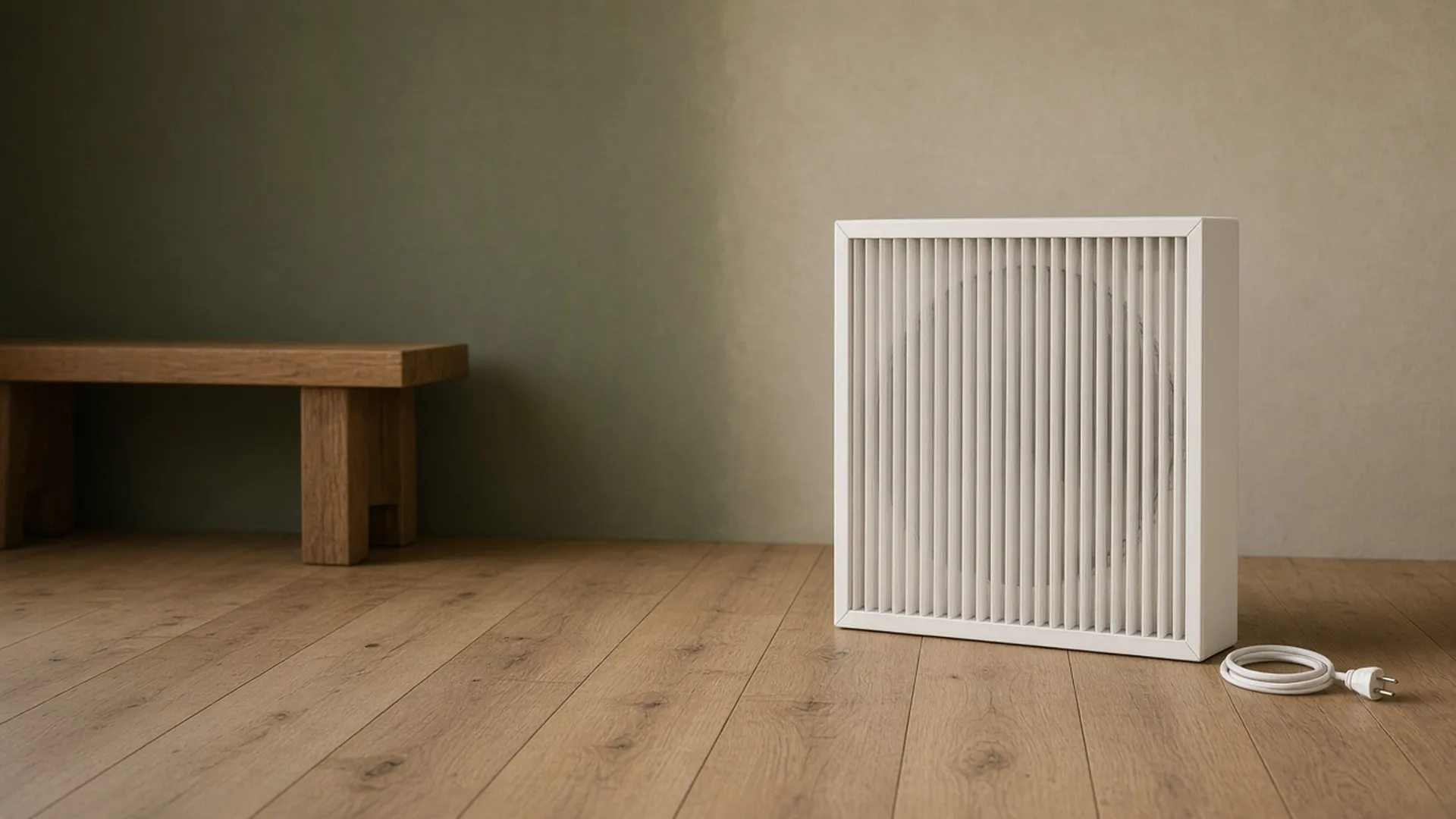
DIY box fan air cleaners, explained
What EPA research found, and its safety tips.
Disclosure: We may earn a commission if you buy through links on this page. It does not change our guidance. Affiliate Disclosure
What it is
EPA says DIY air cleaners are made by attaching one or more furnace filters to a box fan with tape, brackets, or bungee cords.
What EPA found
EPA says DIY air cleaners made with a box fan and MERV 13 air filter are a cost-effective method for reducing smoke concentrations. It says several studies indicate that well-built DIY air cleaners can perform similarly to commercial portable air cleaners in reducing airborne particles such as those in wildfire smoke. EPA says each DIY unit may perform differently, while commercial units are tested to a standard method.
A stopgap, not a substitute
EPA recommends using DIY air cleaners only when products of known performance, such as commercially available portable air cleaners, are not available or affordable. It says they are not recommended as a permanent alternative to these products. EPA says commercial air cleaners with a known clean air delivery rate (CADR) are typically preferred over DIY air cleaners. It says DIY air cleaners do not replace the need for ventilation and should be used in conjunction with other appropriate health measures.
Why results vary
EPA says DIY performance depends on design and how well the unit is put together, and that each one may perform differently, even after reassembling the same unit when changing filters. It says DIY air cleaners were almost completely ineffective with dirty filters.
EPA's safety tips
EPA says to use a newer model box fan (2012 or later) with a UL (Underwriters Laboratory) or ETL (Intertek) safety marking, and that fans built before 2012 may pose fire risks. It says to follow the box fan maker's instructions: do not leave children unattended when the fan is in use, do not use an extension cord, do not use a damaged or malfunctioning fan, and make sure there are working smoke detectors throughout the home. EPA says to choose a filter that is the same size and shape as the fan, align the arrows on the filter with the direction of air flow, and change the filter when it appears dirty or starts to release smoke odors. It says DIY air cleaners should be kept clear of obstructions and operated with common sense precautions, and that EPA cannot assure the results of its safety testing are representative of all DIY air cleaners in all scenarios. We make no safety claim about any fan or build. Do not leave any DIY air cleaner running unattended or while you sleep.
No build steps here
EPA and its partners publish designs and videos on EPA's research page. We link that page and do not repeat build steps here.
Sources: EPA, Research on DIY Air Cleaners to Reduce Wildfire Smoke Indoors; EPA, Create a Clean Room to Protect Indoor Air Quality During a Wildfire; AirNow, When Smoke is in the Air; EPA, Wildfires and Indoor Air Quality (IAQ).
FAQ
General information only. An air purifier is not a substitute for ventilation, for removing the source of a pollutant, or for medical care. Read and follow the maker's manual. The California Air Resources Board strongly advises against the use of ozone generators in spaces occupied by people or animals. If you have asthma, allergies, or heart or lung disease, talk to your doctor. During wildfire smoke, follow local officials and be ready to evacuate. In an emergency, call 911.
Next: wildfire Smoke
Clean rooms and filters.
